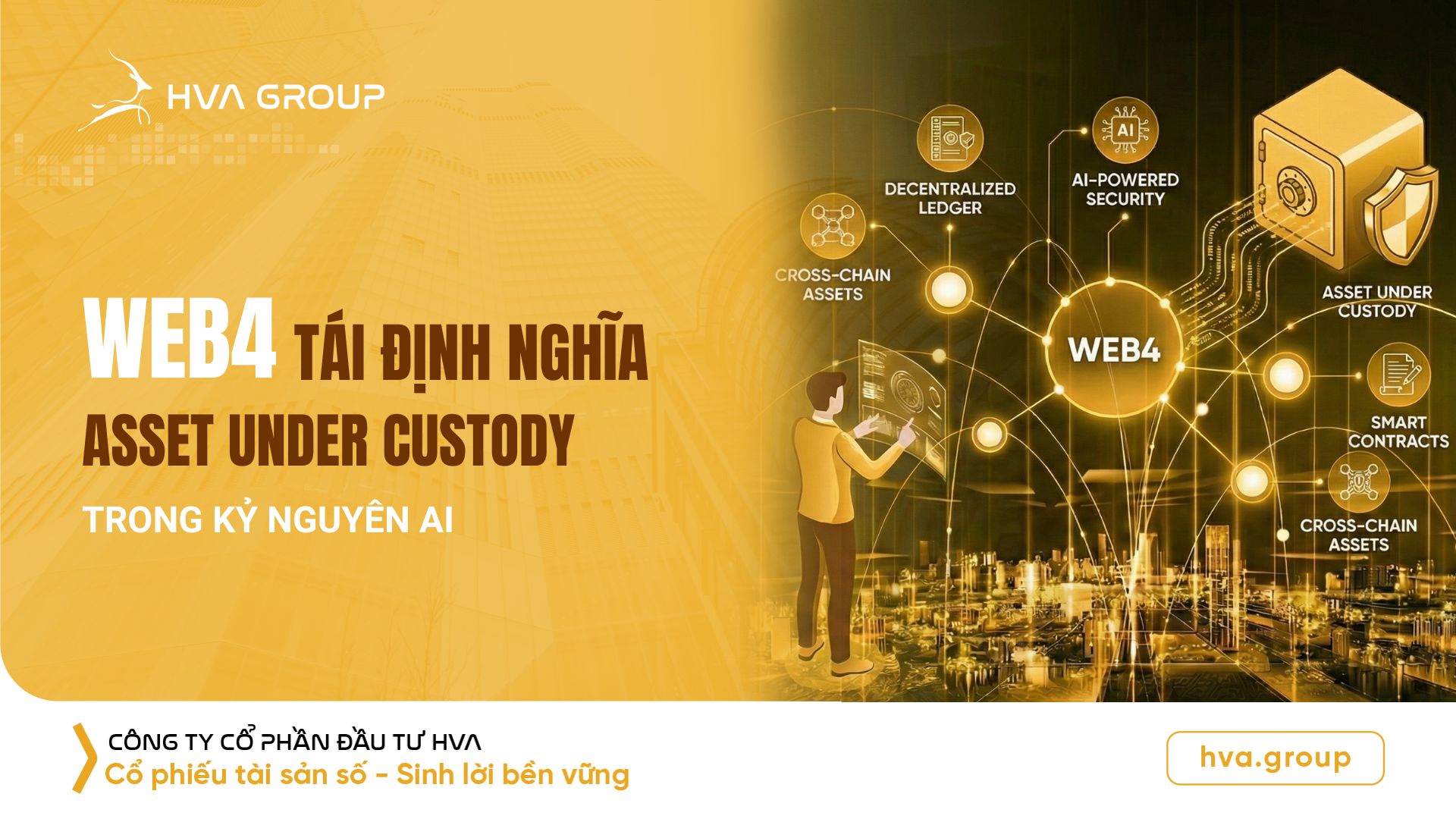

The development of Web4 not only expanded the role of artificial intelligence but also laid the foundation for a new economic structure: the machine-to-machine economy. In this structure, automated systems not only assist humans but can also interact, transact, and make decisions on behalf of humans in real time.
If Web 3 shaped the Internet of digital property ownership, then Web 4 is gradually forming an Internet where assets can “act.” This is the premise for a new concept: self-operating assets.
What is the Machine-to-Machine Economy?
The Machine-to-Machine Economy (M2M Economy) is an economic environment in which devices, systems, and AI agents can directly interact and conduct transactions with each other without the need for continuous manual human intervention.
In the traditional model, every transaction requires a human initiator. In Web4, an AI agent can represent an individual or organization to:
- Market conditions analysis
- Activate the transaction.
- Pay
- Resource reallocation
The emergence of blockchain as a validation and settlement layer helps ensure the transparency and immutability of transactions between automated actors. Simultaneously, cloud and edge computing infrastructure provides real-time processing capabilities at scale.

The Machine-to-Machine Economy is therefore not just about automating processes, but about forming an economic structure where machines can become agents of transaction.
From passive assets to self-operating assets
In a traditional economy, assets are passive. An asset only creates value when it is exploited or traded by people. Asset management relies on manual decisions, administrative processes, and information delays.
Web4 changed this logic.
By combining AI, blockchain, and real-time data, assets can be programmed to react to market conditions. For example, a digital asset could automatically reallocate to higher-yielding channels based on a risk management algorithm. A portfolio could automatically rebalance when volatility exceeds a predetermined threshold.
At a higher level, tokenized physical assets (Real World Assets – RWA) can participate in the digital finance ecosystem, where AI provides real-time valuation and risk analysis. In that structure, assets are no longer just held, but are actively managed.
Self-operating assets do not mean a complete separation from humans. Instead, humans shift their roles from implementers to strategists and system supervisors.
The role of AI agents in the autonomous asset economy.
At the heart of the machine-to-machine economy is AI agents. These are systems capable of:
- Multidimensional data analysis
- Develop forecasting scenarios.
- Execute transactions according to predefined rules.
- Learn from historical data.
In the financial sector, AI agents can manage investment portfolios, adjust risk levels, and optimize asset allocation according to long-term goals. In trading, the system can automatically negotiate contract terms based on market data and trading history.
As AI agents interact with each other, the economy is no longer solely dependent on the pace of human decision-making. This reduces latency, increases the efficiency of capital allocation, and expands the capacity to handle large volumes of transactions.
Infrastructure needed for self-operating properties
A self-sufficient asset-based economy cannot survive without a robust infrastructure.
First, there's the data and computing infrastructure, enabling large-scale information processing with low latency. Next is the authentication and settlement layer, typically handled by the blockchain, to ensure transaction integrity between automated actors. Finally, there's the risk management and compliance mechanism, which monitors AI activity and ensures legal compliance.
Only when these layers are closely integrated can an asset operate in an autonomous yet controlled environment.
Impact on investment management
The Machine-to-Machine Economy poses a strategic question for asset management organizations: where does the competitive advantage lie when assets can operate autonomously?
In that environment, the Asset Under Custody index no longer fully reflects an organization's capabilities. More importantly, it's the ability to build AI systems that can optimize the assets under custody that matters. Asset size is still important, but the ability to operate those assets is the decisive factor in long-term efficiency.
This leads to a shift from traditional financial institution models to financial infrastructure platform models. Organizations that control data, computing, and the settlement layer will be able to operate assets more efficiently in a self-sustaining economy.

Risks and limitations
The autonomous operation of assets also entails risk. Incorrect AI decisions can propagate rapidly within a tightly interconnected system. Algorithmic flaws or erroneous input data can have serious consequences.
Furthermore, legal liability in a machine-to-machine environment remains a subject of debate. When an AI agent executes a transaction that results in losses, determining responsibility between the developer, the operating organization, and the asset owner is not always clear.
Therefore, a self-sustaining asset economy requires a new governance structure where technology, legal frameworks, and ethics are designed in a coordinated manner.
Strategic assessment
The Machine-to-Machine Economy is more than just an advancement in automation. It's a structural shift in how assets are managed and exploited.
While Web3 empowered users with ownership of digital assets, Web4 opened up the possibility for assets to actively participate in the value creation process. In this context, assets are no longer passively waiting for transactions, but can be continuously operated within a smart ecosystem.
For investment and financial institutions, the question is no longer whether or not to apply AI, but whether or not they have the necessary infrastructure to manage assets in a self-sustaining economy.
In the Web4 era, the long-term advantage will belong to entities that build the foundation for self-operating assets, rather than simply holding the assets themselves.