
Over the past decade, blockchain and Web3 have transformed how the world views digital asset ownership. For the first time in internet history, individuals can hold digital assets without relying solely on centralized platforms. However, as we move into the next phase – Web4 – the question shifts from ownership to a larger issue: who will control the AI-powered financial infrastructure?
If Web3 was a revolution in ownership, then Web4 is shaping the competition for control over operational infrastructure. This is not just a technological story, but a strategic one at the national level.
Web3: Decentralized ownership, but centralized infrastructure.
Web3 creates models such as DeFi, NFTs, DAOs, and asset tokenization. Users can self-manage wallets, trade peer-to-peer, and participate in the decentralized finance ecosystem. However, while ownership tends to be decentralized, Web3's core infrastructure remains highly centralized.
The majority of the underlying blockchain is operated by a few key development teams. The cloud infrastructure serving nodes, data, and APIs still relies on large providers such as AWS, Google Cloud, or centralized data centers. Large exchanges act as liquidity gateways. Stablecoins – the payment lifeline of Web3 – are issued by a number of influential organizations.
This shows that Web3 hasn't truly changed the power structure of the global financial infrastructure. It has only expanded the scope of ownership, while the operational layer remains in the hands of a few entities.

Web4: When AI becomes the central orchestration layer
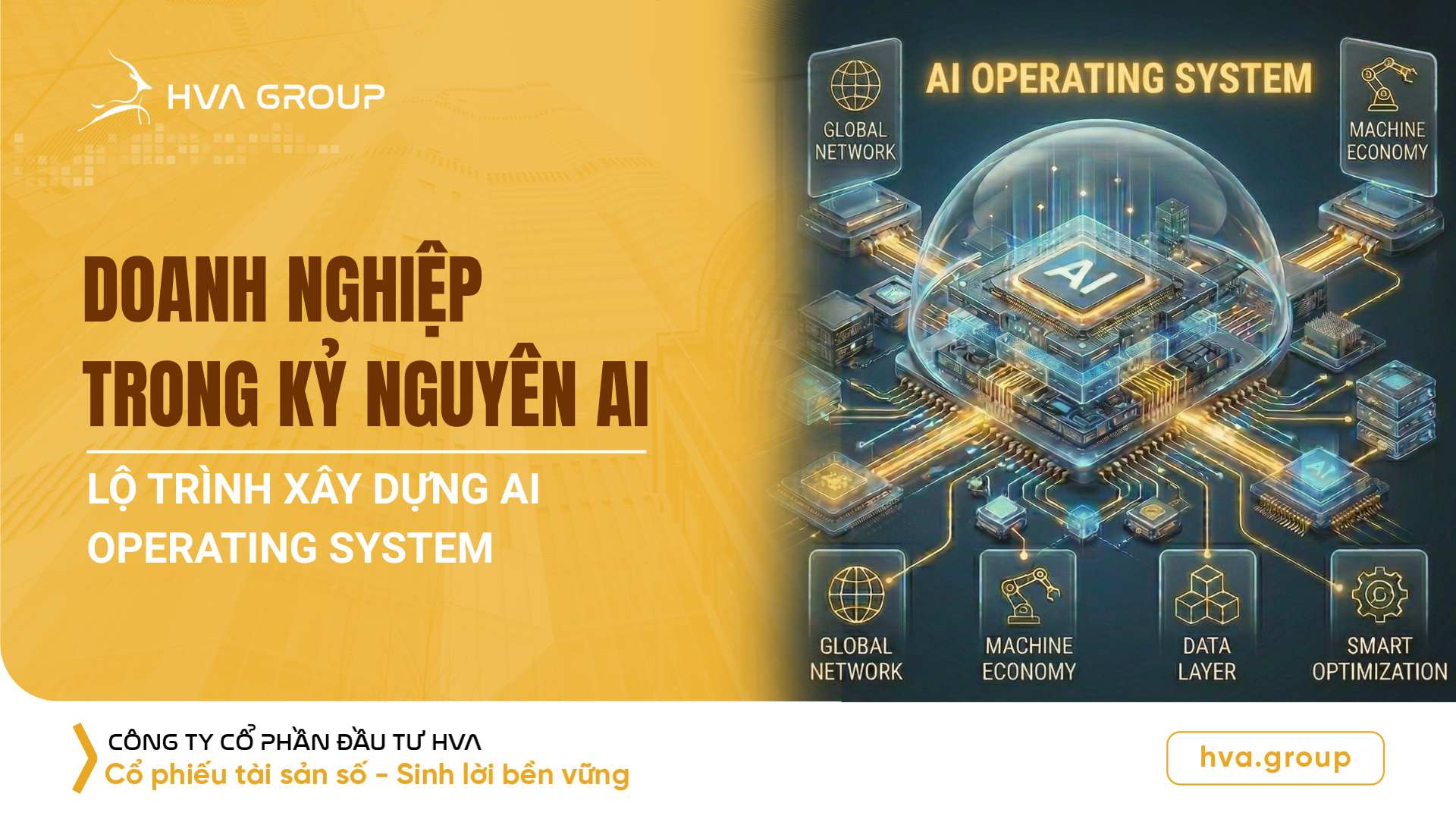
Web4 is not just adding another layer of technology. Web4 places artificial intelligence at the central coordinating position of the digital ecosystem. AI agents can analyze data, make automated decisions, execute transactions, and interact with other systems in real time.
In this structure, the new financial infrastructure comprises three main layers. The first layer is computing and data capabilities – where AI is trained and operated. The second layer is the payments and validation layer – where blockchain and stablecoins ensure transparency and value transfer. The third layer is the application automation layer – where AI agents execute transactions, manage assets, and allocate capital.
The country or organization that controls these infrastructure layers will have a long-term strategic advantage. The competition is no longer about who owns the tokens, but about who controls the compute, data, liquidity, and operating standards.
National-level infrastructure competition
Currently, major financial and technology centers have begun preparing for the Web4 phase.
The United States leads in AI and compute capabilities. Large technology corporations control much of the GPU infrastructure, cloud, and major programming language models. This means the US holds a significant advantage in the Web4 computing infrastructure layer.

Singapore and the UAE are focusing on building flexible legal frameworks for digital assets, fintech sandboxes, and attracting global talent. They don't compete directly in terms of computing scale, but they have advantages in terms of legal environment and capital flows.
China is developing domestic AI, tightly controlled blockchain, and large-scale digital payment systems. This model emphasizes centralized control rather than decentralization.
In that landscape, each country is choosing a different strategy to gain a foothold in the new financial infrastructure. The common thread is that they all recognize that Web4 is not a short-term trend, but a structural shift.
Stablecoins and settlement layer: The lifeblood of Web4
A machine-based economy cannot function using traditional payment systems. AI agents cannot wait for bank business hours, sign paper contracts, or process invoices manually.
Stablecoins thus become the natural payment tool for Web4. They allow for instant, low-cost payments and operate 24/7. The country or organization controlling stablecoins has significant influence and will control the flow of money in the digital economy.
Furthermore, blockchain acts as a settlement layer – a layer that verifies and records transactions between automated entities. If AI is the brain, then stablecoins and blockchain are the circulatory system.
Controlling the payment layer is equivalent to controlling the heartbeat of the ecosystem.
Data and computing: A new power.
In Web4, data and computing power are just as important as liquidity. AI agents are only effective when trained on sufficiently large datasets and running on sufficiently powerful computing infrastructure.
Countries that do not possess domestic compute infrastructure will be dependent on foreign suppliers. This poses a long-term strategic risk, especially as AI becomes directly involved in capital allocation and financial operations.
Therefore, the Web4 competition is essentially a competition for control over data, GPUs, data centers, and operating protocol standards.

Where does Vietnam stand?
Vietnam has the advantage of a young population, high access to technology, and a strong developer community in the blockchain field. However, computing infrastructure, AI data centers, and a legal framework for digital assets are still in their formative stages.
If Vietnam only plays the role of a user of global infrastructure, it will be difficult to gain a long-term advantage. Conversely, if it builds domestic infrastructure capacity and develops a sandbox for AI agents and digital assets, Vietnam can leverage the "leapfrog" opportunity as it did with mobile phones and fintech.
The strategic question isn't whether to join Web4, but at which layer of infrastructure to participate. At the application layer, the payment layer, or the compute layer?
The role of businesses in this competition
In this context, technology and financial businesses are not only beneficiaries but also infrastructure builders. Organizations that invest early in AI operating systems, data governance, and integrated payment systems will have an advantage when the market fully shifts to the Web4 architecture.
This is also why many financial businesses are restructuring their core competencies, integrating AI into investment appraisal, risk management, and portfolio operations.
The competition is no longer about who has the better product in the short term. The competition is about who can build a more sustainable operating system in the long term.
Conclude
Web 3 opened up ownership of digital assets. Web 4 raises a bigger question: who controls the operational infrastructure of the digital economy? In the age of AI, power lies not only in assets, but also in the ability to coordinate capital flows, data, and decisions through automated systems.
The nation and businesses that control the computing, payment, and AI operational layers will hold a strategic advantage in the next decade. The shift from Web 3 to Web 4 is therefore more than just a technological leap; it is a reshaping of the global financial power structure.