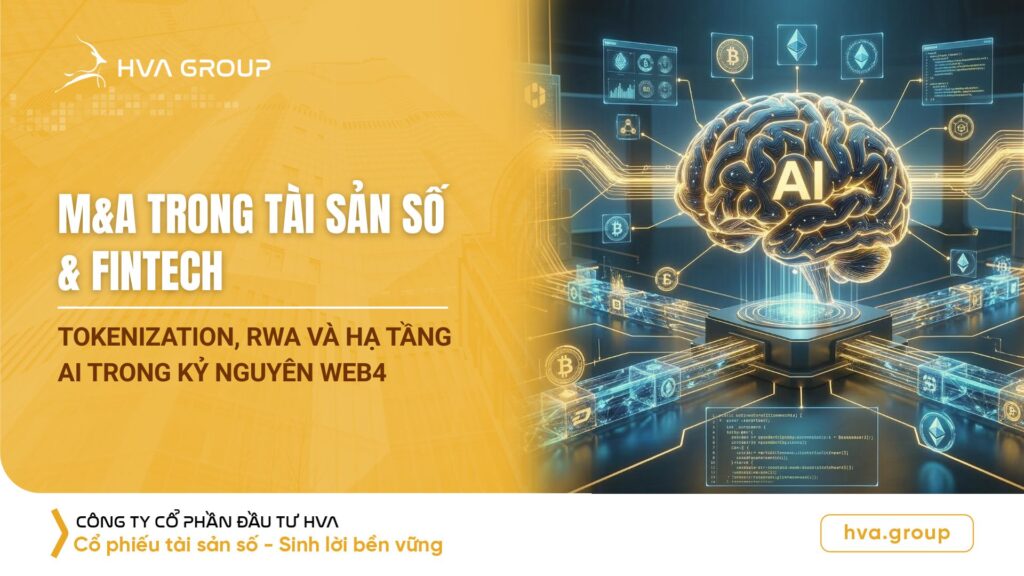
In the wave of Web4 and AI-native finance, M&A is no longer simply about scaling up or increasing market share. For the digital asset and fintech sectors, M&A is becoming a tool for restructuring financial infrastructure at a deeper level – where technology, data, and risk management capabilities determine the long-term value of a business.
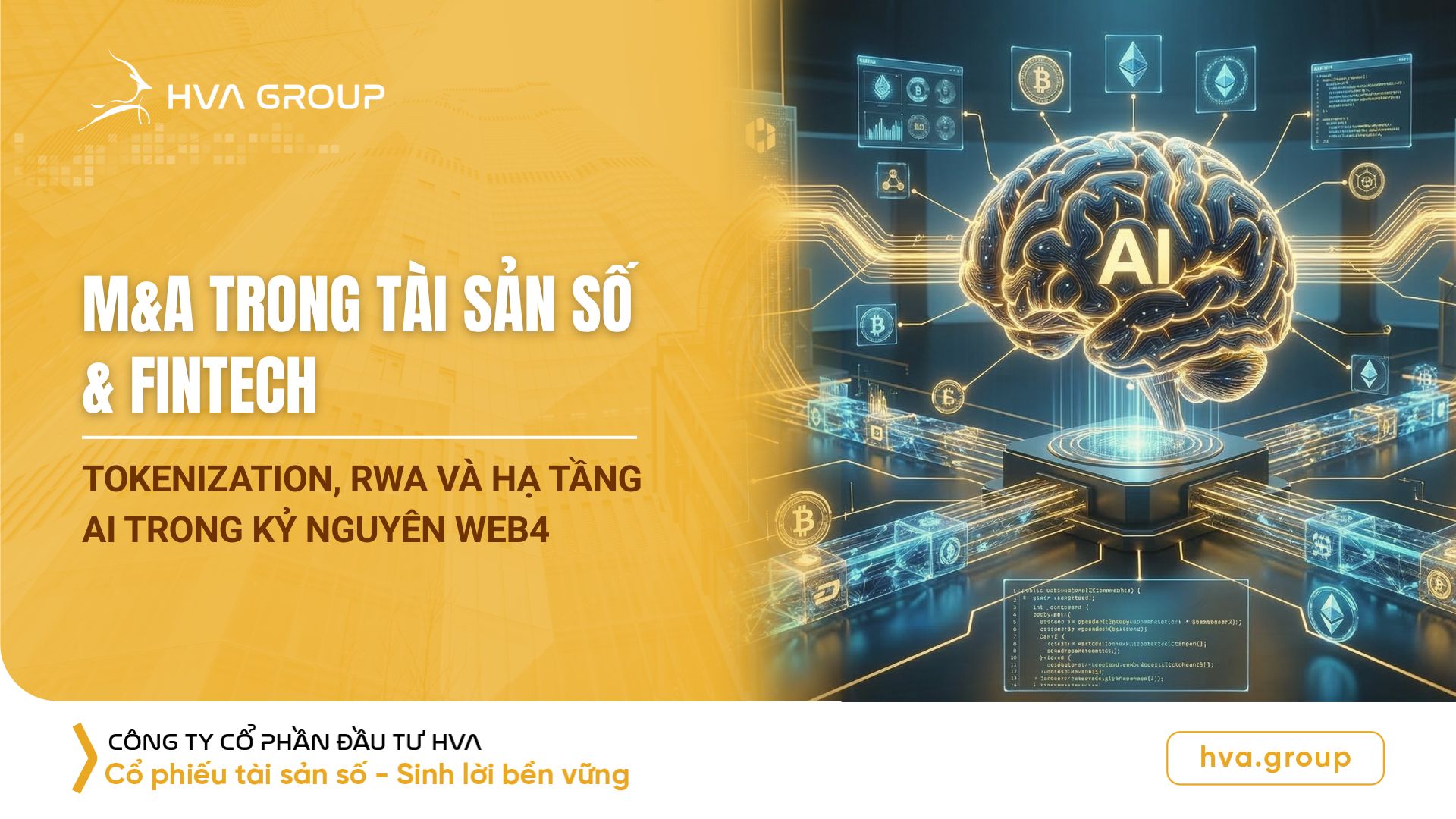
While previously M&A deals were valued based on cash flow and EBITDA, in the digital asset sector, factors such as tokenization capabilities, custody infrastructure, AI Risk Engine, and RWA (Real World Assets) integration are becoming core components in the valuation structure.
1. Tokenization: Transforming asset structure through M&A
Tokenization is not just a technological trend, but a shift in how assets are owned and traded. Converting traditional assets into tokens on the blockchain increases liquidity, reduces intermediary costs, and expands access to capital.
In this context, M&A deals are not only targeting businesses with physical assets, but also platforms with the capacity to digitize those assets. When a fintech organization acquires or merges with a tokenization platform, the value lies not in current revenue but in the ability to expand the market for digitized assets in the future.
M&A has therefore become a method to accelerate the development of digital asset infrastructure instead of developing it from scratch.
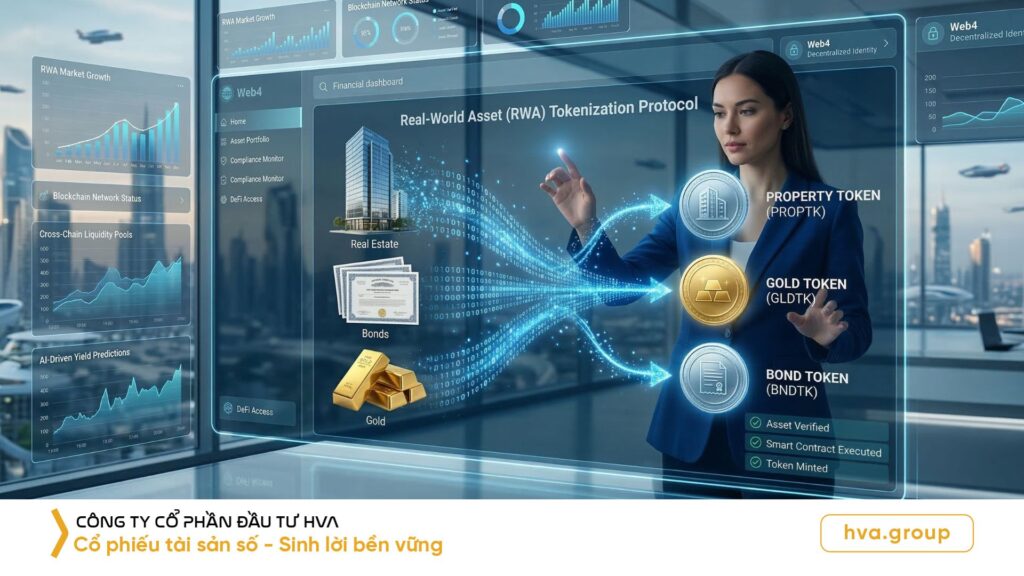
2. RWA (Real World Assets): Connecting real-world assets and the blockchain ecosystem.
RWA is the next step in tokenization – where real estate, bonds, commodities, or company shares are brought onto the blockchain as tradable digital assets.
M&A deals in this sector typically target businesses that possess tangible assets, combined with a technology platform capable of digitizing and managing the asset lifecycle. This creates a vertically integrated model: from asset issuance, valuation, and transactions to custody.
In Web4, where AI agents can automatically allocate capital and trade assets, RWAs become the source of data and asset input for automated operating systems. Therefore, M&A in RWAs is not just a financial story, but a strategy for building infrastructure for a machine-to-machine economy.
3. AI Risk Engine: The core of risk management after M&A.
In the digital asset environment, risks stem not only from price volatility but also from liquidity, leverage, smart contracts, counterparties, and legal factors.
An M&A deal in fintech that doesn't integrate an AI Risk Engine will create a fragmented system and overlapping risks. Conversely, when an AI Risk Engine is integrated into the core operations, businesses can:
- Dynamic real-time risk scoring
- Discovering potential correlations between assets
- Automatic alert and category adjustment
- Increase the ability to meet legal requirements.
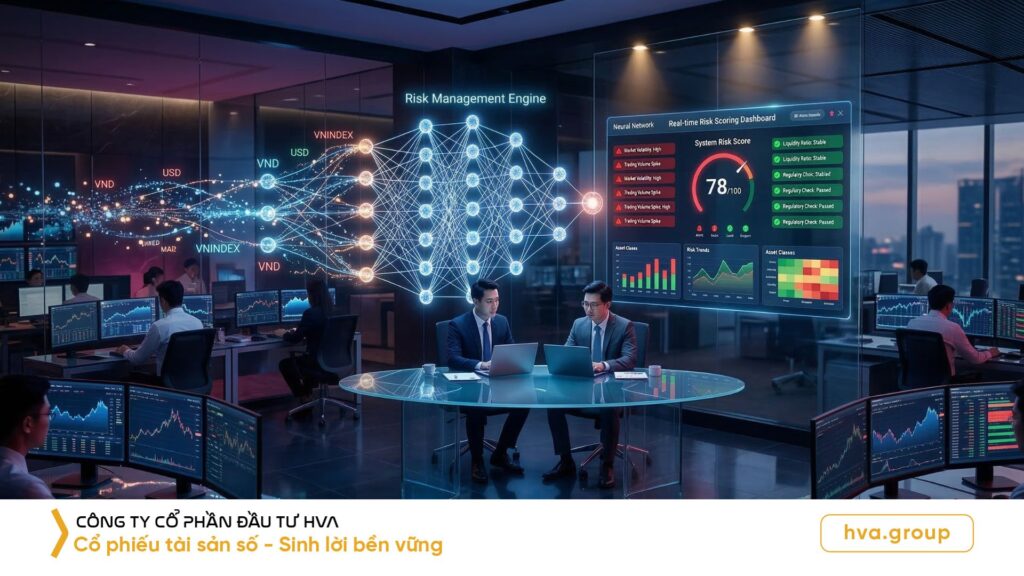
This is especially important in Web4, where transaction systems can operate semi-automatically or fully automatically. M&A therefore needs to be designed not only to scale, but also to synchronize risk management systems.
4. Custody infrastructure: Trust is the deciding factor.
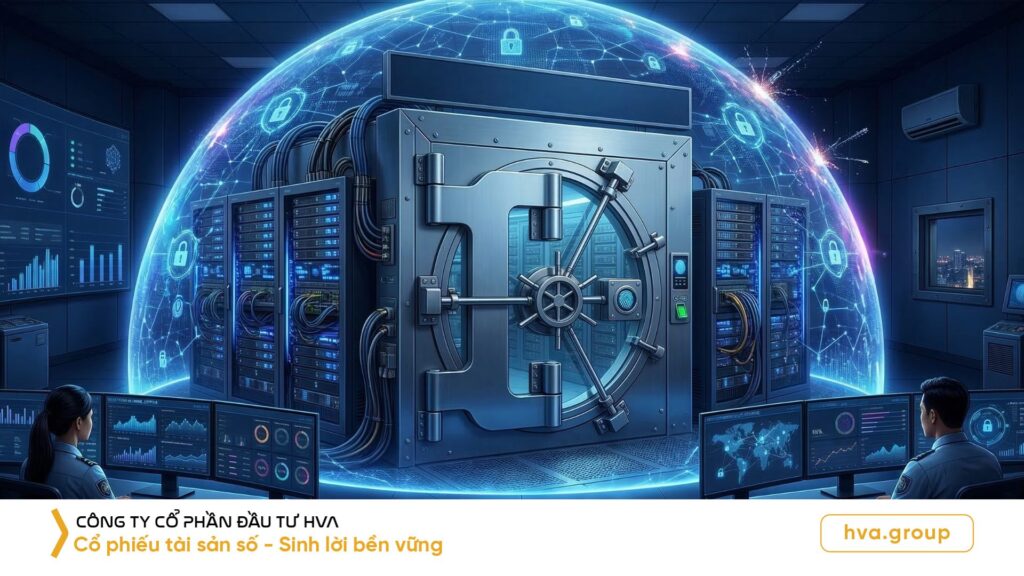
Custody is the foundation of trust in digital assets. When assets are tokenized and traded on the blockchain, issues of custody, private key security, and legal compliance become vital.
M&A deals in this sector typically focus on acquiring or integrating high-standard custody infrastructure that meets security and compliance requirements. This is not just a technical requirement, but a condition for attracting institutional capital.
In the long term, fintech companies with robust custody infrastructure will have a clear competitive advantage as the market enters a more tightly regulated phase.
5. M&A in digital assets: From scaling up to building ecosystems
The key difference in M&A in the Web4 era is that the goal is not just revenue growth, but building an integrated ecosystem:
Tokenization → RWA → AI Financial Engine → AI Risk → Custody → Compliance.
A business that owns this complete value chain will be able to operate digital assets at an organizational level, while also expanding into the agentic economy in the future.
This is also the direction that pioneering organizations are pursuing: instead of acquiring individual companies, they are designing M&A as a component of an AI Operating System architecture in the financial sector.
Conclude
Mergers and acquisitions in the digital asset and fintech sectors are no longer simply financial strategies. They represent a restructuring of financial infrastructure in the Web4 era.
Businesses that can synchronize these components through strategic M&A will possess a long-term advantage as the digital asset economy enters a mature phase.