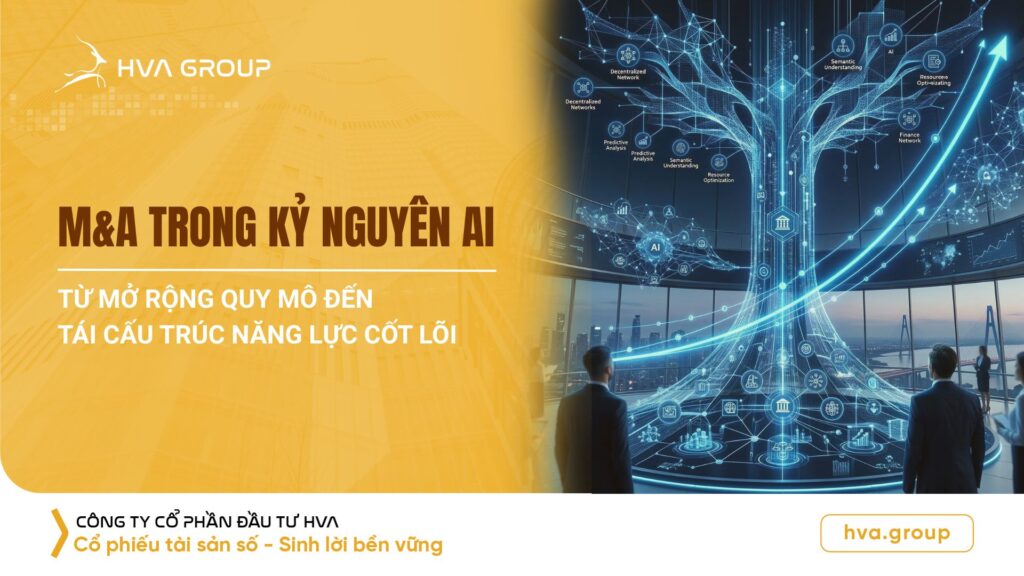
For decades, mergers and acquisitions (M&A) were seen as tools for scaling up and increasing market share. Businesses acquired competitors to increase revenue, acquire assets, or strengthen their competitive position. However, with the advent of AI and Web 4, the nature of M&A is changing. Value is no longer about "how much more you buy," but about "how much the operational structure is upgraded.".
In the fintech, digital asset, and automation economy, competitive advantage increasingly depends on data processing capabilities, AI integration, and the level of internal system standardization. A large but fragmented business with disjointed data and reliance on manual processes will be at a disadvantage compared to organizations with lean operational architectures but deep technological integration. Therefore, M&A in the AI era needs to be viewed as a strategy for restructuring core capabilities, not just a superficial growth strategy.
From expanding revenue to upgrading enterprise operating systems.
In the traditional model, M&A transactions are typically valued based on EBITDA, cash flow, and tangible assets. However, as AI becomes central to financial systems and business operations, the way value is assessed is changing. The market is beginning to focus more on data infrastructure, the level of automation, the ability to scale without increasing marginal costs, and real-time risk management systems.
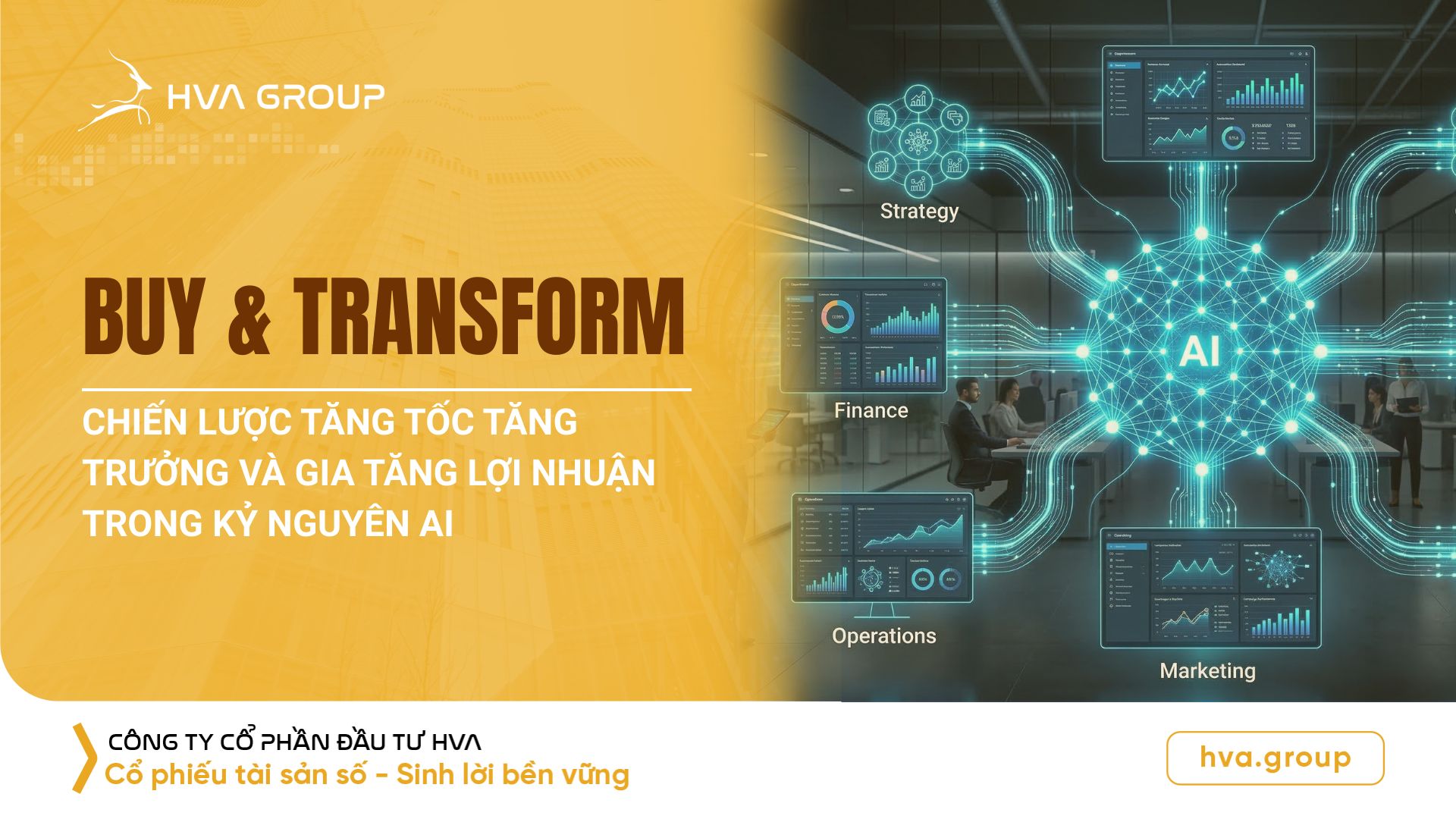
A business with high revenue but lacking data integration will take longer to make decisions and struggle to adapt to market fluctuations. Conversely, an organization with a robust AI Operating System, even if smaller, can react more quickly and optimize resources more effectively. In this context, M&A is no longer simply about combining assets, but an opportunity to upgrade the business's operating system to a new level.
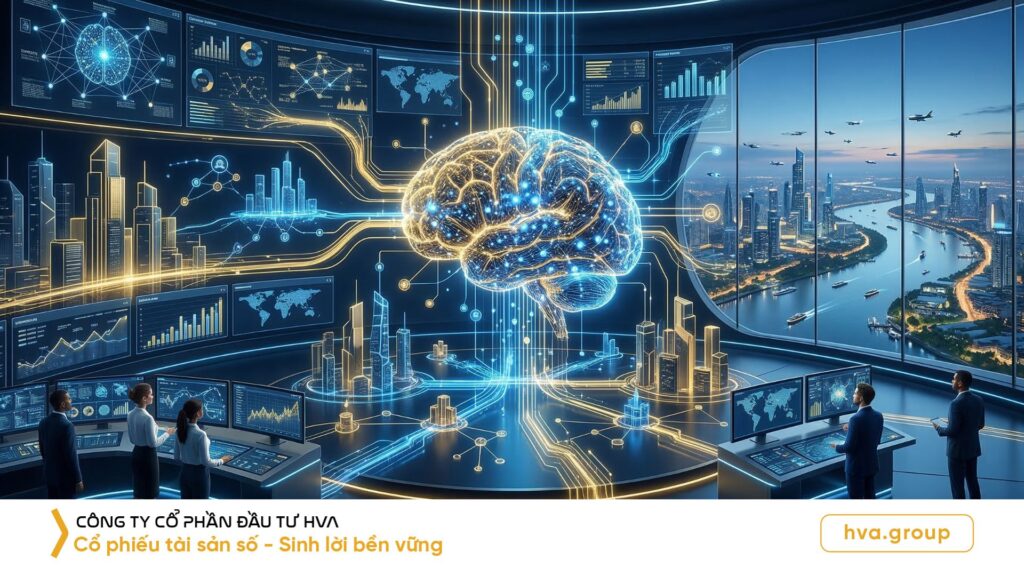
Integrating AI into core operations after M&A.
Many mergers fail not because of misvaluation, but because of a failure to restructure the systems after the merger. In the AI era, if businesses simply maintain their old structure and operate the systems in parallel, complexity will increase instead of creating synergies.
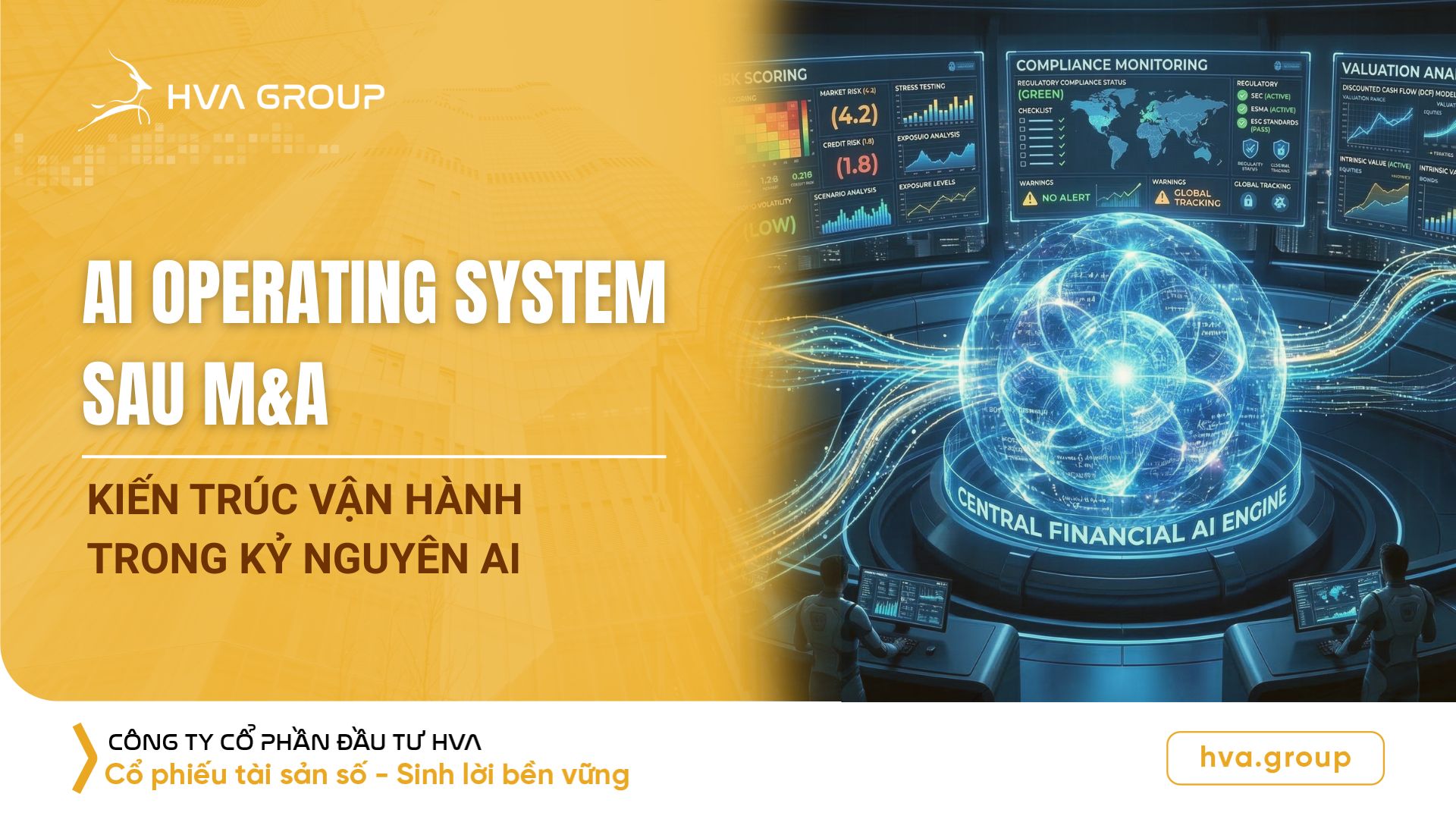
To create real value, AI needs to be integrated at the core of the organization. This includes standardizing valuation and capital allocation systems through an AI Financial Engine, building dynamic risk scoring systems using an AI Risk Engine, and implementing a Multi-Agent System model so that departments can collaborate based on real-time data. When these components are synchronized, businesses can shorten decision cycles, reduce bias, and increase transparency in governance.
If M&A deals are not linked to AI integration and data standardization, they will only increase management costs and create additional layers of operation. In that case, larger scale does not necessarily equate to a stronger competitive advantage.
M&A as a long-term infrastructure development strategy
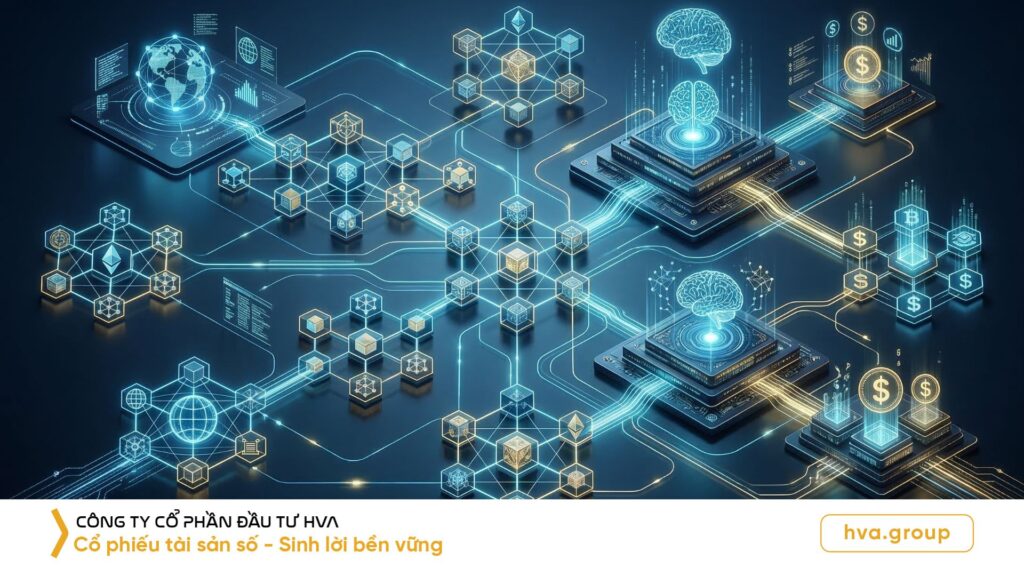
In the Web4 era, sustainable competitive advantage lies not in a single product but in the infrastructure. Data infrastructure, AI infrastructure, digital asset custody infrastructure, and legal compliance systems are key factors determining a business's long-term survival.
Products can be quickly copied in the digital environment. However, a deeply integrated and purposefully built infrastructure will create significant barriers to entry. Modern M&A, therefore, should not focus solely on expanding the product portfolio, but should be designed as part of a strategy to build an operational ecosystem.
When businesses possess a solid infrastructure, they can develop additional layers of services on top of it without significantly increasing platform costs. This is the factor that helps improve profit margins and increase market valuation in the long term.
Business valuation in the age of AI
One of the most significant changes in M&A in the AI era is how the market values businesses. Beyond traditional financial metrics, investors are increasingly focusing on the level of automation, data quality, scalability, and the extent to which AI is integrated into management systems.
Businesses with robust AI Operating System architectures are often valued higher because they can maintain stable profit margins, reduce operating costs, and scale rapidly without correspondingly increasing human resources. This demonstrates that the true value of M&A lies in restructuring internal capabilities, not just increasing asset size.
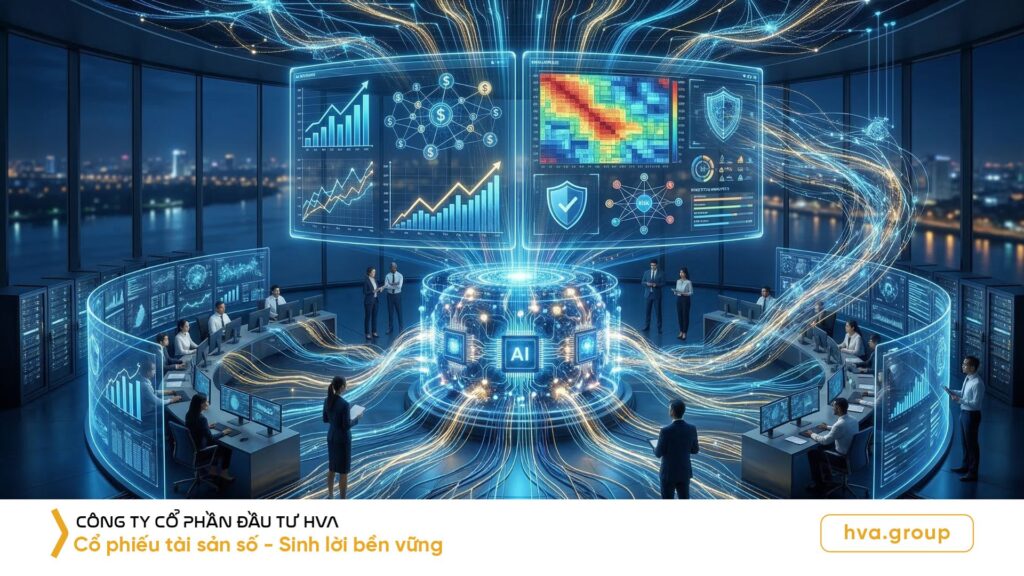
Compatible with Web4 and the self-operating economy.
Web4 opens up an economic structure where AI agents can automatically execute transactions, allocate capital, and monitor risk in real time. In that environment, businesses cannot operate based on disparate parts and scattered data. Components such as tokenization, RWA, AI Financial Engine, AI Risk Engine, and custody infrastructure need to be integrated into a unified architecture.
M&A has become a tool for synchronizing ecosystems, reducing fragmentation, and accelerating technology integration. When done correctly, M&A not only helps businesses expand their markets but also helps them build operational platforms suitable for an automated economy.
Conclude
In the AI era, M&A is no longer purely a growth strategy. It's a strategy for architecture and building core capabilities. Businesses shouldn't buy to get bigger, but to get smarter. They should buy to standardize data, integrate AI, and build long-term infrastructure.
As competition shifts from scale to operating systems, businesses with integrated AI architectures will have the ability to shape the market. M&A, therefore, is no longer simply about expansion, but about redesigning operating platforms for the future.